

Smart Living

How Home Tech Is Making Life More Efficient
In today's era of rapid technological advancement, technology is no longer a distant concept confined to laboratories; it has deeply permeated every corner of our daily lives, quietly changing our lifestyles and rhythms. From being awakened by the gentle music of a smart speaker in the morning, to checking real-time traffic conditions via a mobile app during the commute; from seamless collaboration with colleagues thousands of miles away through video conferencing during work breaks, to smart home systems automatically adjusting lighting and room temperature upon returning home at night, technological living is redefining "simplicity" and "efficiency" with its ubiquitous convenience.

What Is Digital Lifestyle and Why Does It Matter?
In the age of network information, digital management holds a unique position, sweeping across various industries. So-called enterprise digital transformation essentially involves using technologies and tools such as the internet, cloud computing, and big data to more effectively improve the mechanisms and efficiency of enterprise operations, thereby better promoting enterprise development. Digital lifestyle refers to a new form of existence based on digital technologies such as the internet, big data, and artificial intelligence, fully integrated into daily life, encompassing all aspects of work, consumption, social interaction, healthcare, education, and travel. Digital life is a lifestyle based on the internet and digital technologies, improving life efficiency and quality through the integration of technological applications via virtual networks.
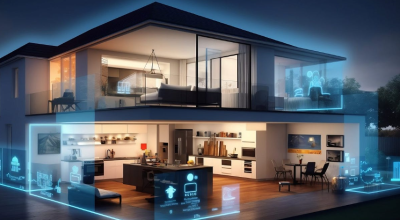
How Smart Homes Are Changing Daily Life
In recent years, with the continuous maturation of sensors, networks, and cloud services, smart homes have gradually entered ordinary households. It's not a magic trick that transforms human life into a science fiction scenario overnight, but rather a gradual process that enables different devices in the home to "work collaboratively" by turning simple actions in everyday scenarios into pre-set, automatically executed processes. You only need to set some preferences and rules, and daily chores will be completed automatically without you even noticing. The most direct benefit of this change is the increased convenience, comfort, and sense of control.
The key to a technologically advanced lifestyle is to make technology serve people, not to make people adapt to technology. Smart home systems, leveraging IoT technology, connect previously independent devices in the home—such as lights, air conditioners, security cameras, speakers, and even kitchen appliances—into a cohesive whole. Users can achieve remote control and scene-based联动 (interconnection/interaction) through mobile apps or voice assistants. For example, a command like "I'm home" can trigger a series of actions, such as unlocking the door, turning on the hallway light, and adjusting the air conditioner to a comfortable temperature. This convenience not only saves time and energy but also improves quality of life and security in subtle ways.

What Are the Must-Have Smart Devices Right Now?
In today's world where AI technology is fully integrated into daily life, smart devices are no longer simple tools, but core assistants for improving quality of life and optimizing work efficiency. From home security to online creation, from work recording to life recording, there are suitable smart gadgets for different scenarios. Today, we recommend four powerful and highly practical smart devices, each precisely addressing pain points and allowing technology to truly serve life. Digital home appliances and other electronic products are indispensable parts of our lives, from the smartphones that almost everyone owns to the increasingly ubiquitous smart home appliances.

What Makes a Home Truly Intelligent?
Smart home technology uses the home as a platform to connect lighting, security, appliances, and environmental monitoring devices into a unified management system, enabling remote control, voice interaction, and automated scene linkage. Core components include a home gateway (responsible for protocol conversion and device management) and smart terminals, supporting control via mobile phones, voice, and other methods. This system enhances residential security (burglar alarms, gas monitoring), convenience (remote appliance control), comfort (automatic temperature and humidity adjustment), and aesthetics, while optimizing energy efficiency. In essence, a smart home uses integrated wiring, network communication, security, automatic control, and audio-visual technologies to integrate home-related devices, creating a centrally managed and intelligently controlled residential facility management system. This improves home security, convenience, comfort, and aesthetics, while achieving an environmentally friendly and energy-efficient living environment. In other words, a smart home is not a single product, but rather a system that connects all the products in the home into an organic whole, which the homeowner can control anytime, anywhere.
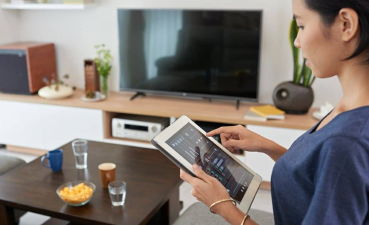
How Smart Technology Improves Daily Productivity
In today's work environment, information overload and numerous tasks often make manual processing inefficient. Intelligent technology is not a distant future trend, but a practical transformation of our daily work methods. By deploying user-friendly tools, repetitive tasks, data organization, and cross-departmental collaboration can be made more efficient. The key is to focus on output and quality, rather than pursuing flashy techniques.
To implement intelligent technology, a clear understanding of existing workflows is essential. Set aside a week to map out the entire process from requirement submission to final delivery, recording the time spent, errors, and waiting periods at each step. This will identify which steps are highly repetitive and low-value-added, and which information is prone to being missed. The goal is to reduce unnecessary waiting, shorten switchover costs, and improve the consistency of each output.

Why Intelligent Living Is Becoming the New Standard
"One-click" control, effortlessly managing the entire system—this kind of "laid-back" lifestyle is undoubtedly what many people yearn for. In recent years, with the continuous prosperity of the social economy, people's pursuit of quality of life has been increasing, and the demand for convenience in a fast-paced life has spurred the booming development of the "lazy economy." Intelligent living is the best interpretation of this "lazy" lifestyle. In particular, smart homes, by providing convenient and convenient services, meet the needs of modern society for a high-quality life, driving the development of the "lazy economy."

How Connected Living Enhances Comfort and Control
In daily life, technology is not about turning people into machines, but about making life more comfortable and convenient in a smarter way. "Comfort" includes a pleasant environment, time savings, health and safety guarantees, and psychological relaxation. The purpose of technology is to help us be less distracted by trivial matters and focus our attention on truly important experiences and emotions.
The emergence of "Internet+" has redefined our understanding of life. From daily shopping to social connections, everything seems to be accelerating towards digitalization and intelligence. This transformation is not only reflected in our daily behavior but also profoundly affects our lifestyles and beliefs. The constantly emerging concepts of smart devices, smart homes, and smart cities place our lives in unprecedented convenience.
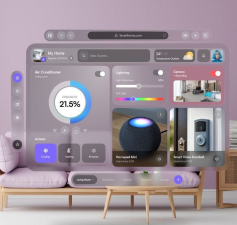
The Rise of AI-Powered Home Experiences
With the rapid development of artificial intelligence (AI) technology, smart homes are leaping from "functional" to "intelligent." The deep integration of AI with cutting-edge technologies such as the Internet of Things (IoT), machine learning (ML), and natural language processing (NLP) is driving the transformation of traditional homes towards intelligence, ecology, and personalization. Smart home devices are no longer just simple automation tools, but have become a continuously expanding market with a double-digit compound annual growth rate. In this wave, how can AI become a proactive, data-driven, and ecosystem-collaborating smart living partner? How will global smart homes reshape our homes and living scenarios? What challenges and opportunities will it face?